Product Details

Ag/AgCl Conductive Paste for Bioelectrodes & Reference Electrodes K-3981

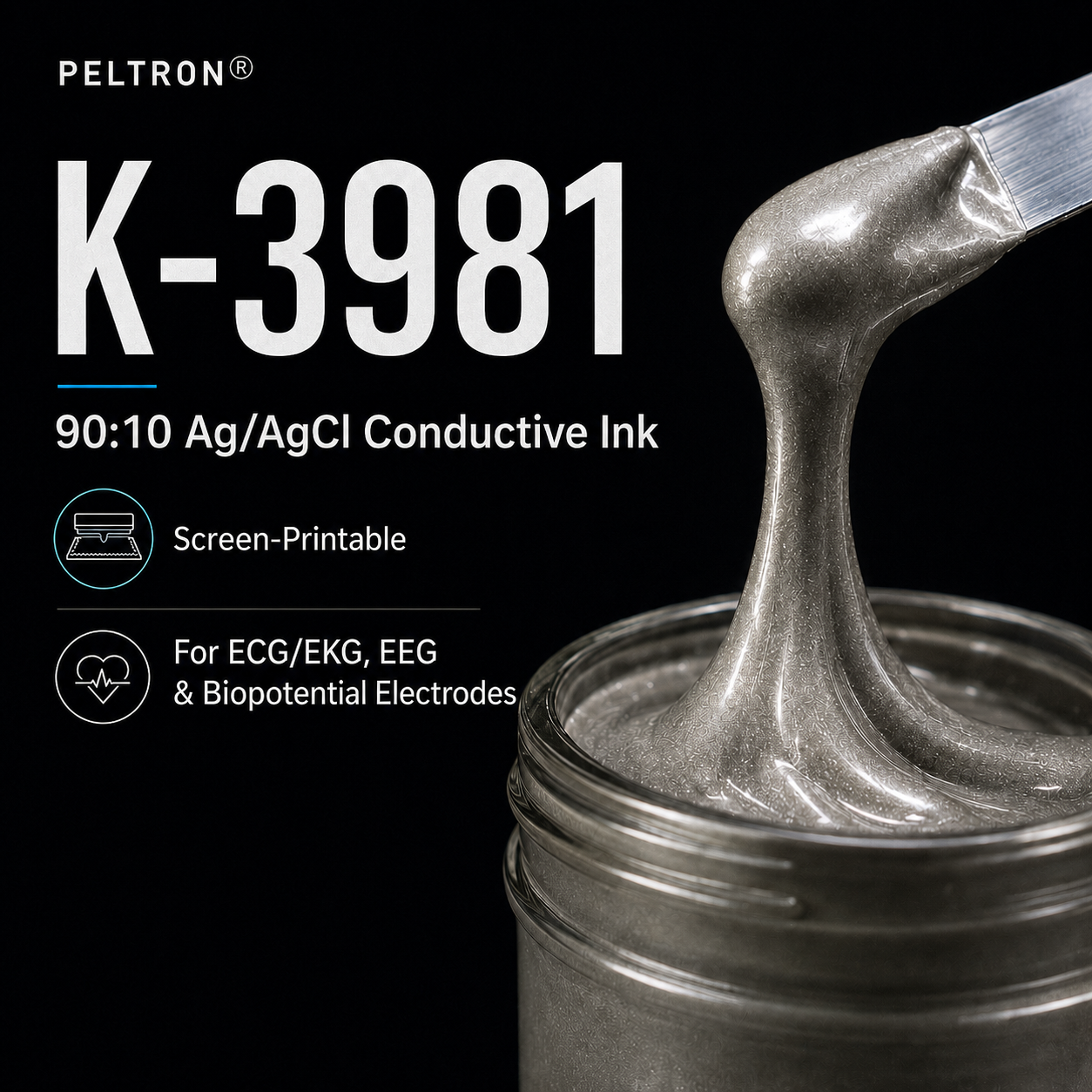
PELTRON K-3981 90:10 Ag/AgCl conductive ink shown as a metallic screen-printable paste being lifted from a container.

K-3981 is a silver/silver chloride (Ag/AgCl) conductive paste designed for biopotential electrodes, including ECG and EEG electrodes, as well as biosensor electrodes.

With an Ag:AgCl ratio of 90:10, K-3981 is suitable for screen printing and can be used to form flexible printed electrodes. It is suitable for R&D and prototyping of ECG electrodes, EEG electrodes, biosensor electrodes, and related biomedical sensing devices. The current Japanese product page also identifies ECG application experience and research experience involving EEG and blood glucose sensors.

Product Category by Use by Function
Product Category
  • Silver chloride paste for biosensors
by Use
  • Biosensors
  • Small Components Electrode
by Function
  • One Component
  • Flexible
  • Bending Resistant
  • Long Potlife

    Features

  • Ag:AgCl (silver:silver chloride) ratio = 90:10
  • Suitable for screen printing of Ag/AgCl electrodes
  • Proven application experience with ECG electrodes
  • Research experience with EEG electrodes and blood glucose sensors
  • Good compatibility with flexible substrates
  • Good flexibility and bending resistance
  • Suitable for continuous screen printing

    by Use

  • Bioelectrodes for ECG measurement
  • ioelectrodes for EEG measurement
  • Electrodes for blood glucose sensors
  • Electrodes for biosensors and biosensing applications
  • Reference electrodes
  • R&D and prototyping of electrodes for flexible and wearable devices

Types of packaging

Commercial Supply: 1.0 kg
Sample Quantity: From 100 g

Handling Precaution

  • The material is photosensitive, and we recommend working in a light-shielded area.
  • Quality assurance period: 6 months refrigerated

Instructions for Use

  1. The ingredients may separate or the filler may settle. Stir well before use.
  2. Add a diluent to adjust the viscosity to a level that is easy to work with.
  3. Apply it to the base material using a painting machine.
  4. Curing should be done under the specified curing conditions.